Lesson reading
live
14 min
Start with the lesson question, connect the representations, and test the model with evidence.
Inspect the opening phenomenon
Predict what changes, then name the evidence.
Apply in the lab
Name the evidence before reading the answer.
Read only what helps
Then use the lab and recall check.
More when needed
Transcript and resources stay available below.
Course progress
Energy Transfer, Calorimetry, and Enthalpy
Decision challenge
Use the opening example to make a prediction, identify evidence, and explain which model supports it.
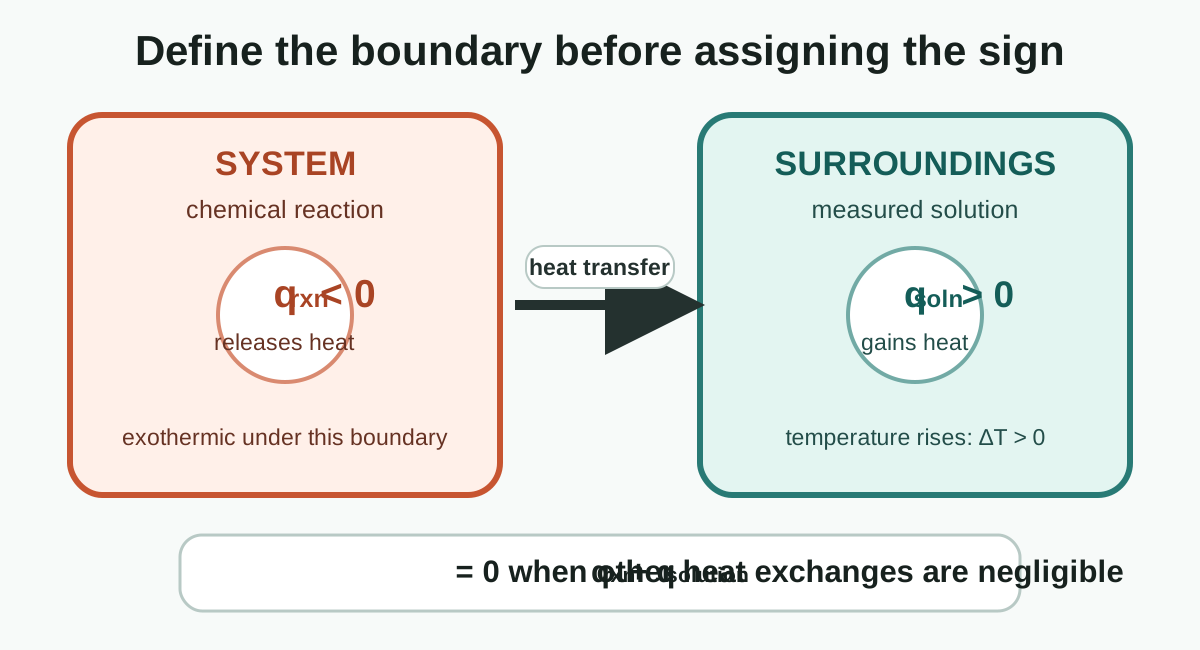
Predict the sign of reaction heat when the measured solution warms.
Define the boundary before interpreting a calorimetry temperature change.
Before
Predict the sign of reaction heat when the measured solution warms.
During
Track the boundary, temperature sign, surroundings heat, reaction heat, and molar conversion.
After
Explain why a positive solution heat implies a negative reaction enthalpy under the stated assumptions.
Lesson reading
live
14 min
Video script
draft
Transcript fallback
available
courses/ap-chemistry/modules/06-thermochemistry/lessons/01-energy-transfer-calorimetry-and-enthalpy/video-transcript.md
Calorimeter Energy Audit
approved
1 hr 30 min
Mastery check
live
6 questions / 15 min
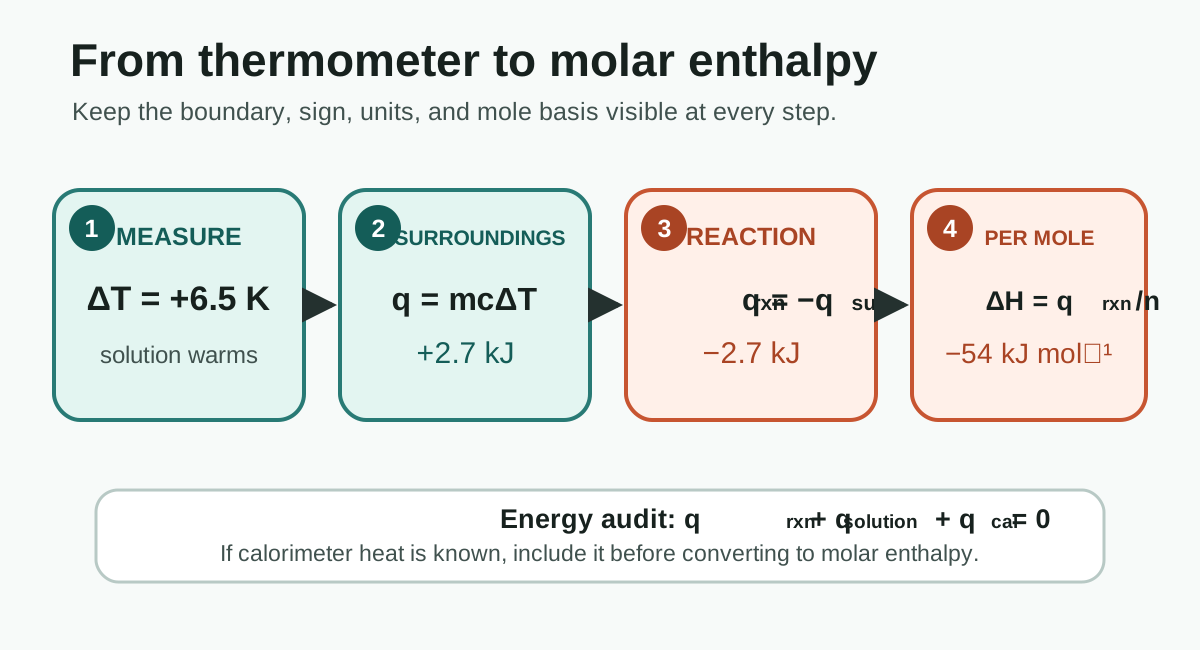
A hot cup does not prove the reaction gained heat. First draw the boundary. The solution is the measured surroundings. If it warms, delta T is positive, so q solution equals m c delta T and is positive. Energy conservation makes q reaction negative: the reaction is exothermic. For one hundred grams warming six point five degrees, q solution is about plus two point seven kilojoules. If zero point zero five zero zero mole reacted, delta H is about minus fifty-four kilojoules per mole. Retrieval pause: does breaking a bond release energy? No. Bond breaking requires energy; forming bonds releases it. Keep the boundary, sign, units, and assumptions together. Continue the free AP Chemistry lesson on EduQuest AI.
Reading lab
Connect the lesson's words, diagrams, graphs, evidence, and equations.
How can a temperature change become defensible evidence about energy transfer in a chemical process?
The system is the reaction or process being studied; everything else is the surroundings. Energy conservation requires If the solution warms, the solution gained heat: , so the reaction released heat: . Temperature measures average particle kinetic energy, not total thermal energy.
For a solution treated as the surroundings, Suppose of solution warms from to , and assume : With negligible calorimeter heat loss, . If reacted, The two-significant-figure result reflects the measured temperature change. A better model includes and all relevant surroundings terms.
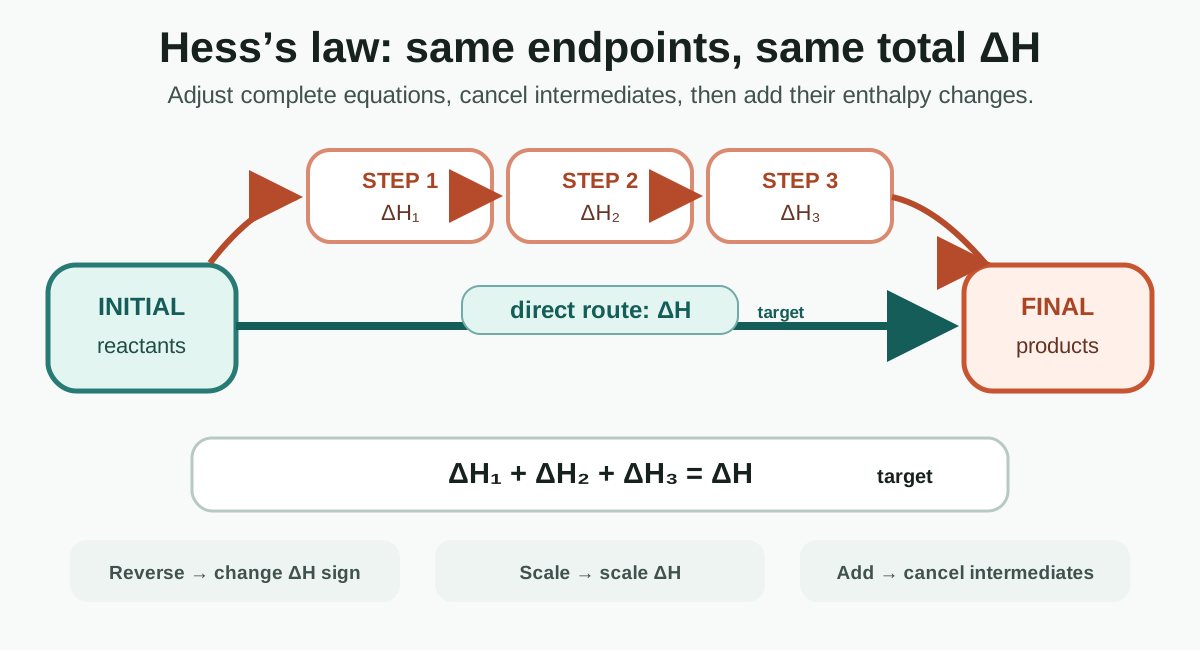
At constant pressure, heat transferred for the process is represented by . Reversing a thermochemical equation changes the sign of ; multiplying the equation multiplies . Adding equations adds their enthalpy changes—Hess's law—because enthalpy is a state function. For standard formation enthalpies, Coefficients and physical states matter. Elements in their standard states have by convention.
Breaking bonds requires energy; forming bonds releases energy. Average bond enthalpies estimate This gas-phase average-bond model is approximate and is not interchangeable with measured formation-enthalpy data.
Determine how including calorimeter heat capacity changes a measured molar enthalpy while maintaining a defensible system boundary and uncertainty record.
Instructor supervision is required. Review every SDS and the local emergency and waste plan before work. Conduct the activity in a normally ventilated instructional laboratory; use local exhaust or a fume hood when the selected reagent SDS requires it. Never use concentrated reagents. Dilute acids and bases can still irritate or damage eyes and skin, and some dissolutions can make the cup noticeably hot or cold. Avoid skin/eye contact, splashing, inhalation of powders, and direct handling of a hot cup. Flush eye or skin exposures with water for at least 15 minutes, notify the instructor, and follow institutional eyewash, spill, and medical-response procedures. Stop the trial if the vessel leaks, the probe or cup becomes unstable, unexpected gas or odor appears, or the temperature approaches a teacher-set safe limit. Collect mixtures in the instructor-designated labeled aqueous-waste container; never use the drain without authorization.
The instructor must select the actual chemical system, concentration, microscale quantity, ventilation control, glove material, and waste stream from current SDS information and institutional rules. Warm/cool water calibration is the lower-risk option. A teacher-provided dataset or simulation is appropriate when chemical handling is unsuitable.
Including a calibrated calorimeter term changes the magnitude of inferred reaction heat and generally reduces systematic underestimation caused by treating the cup as thermally invisible.
Record units and uncertainty for every measured quantity. For each trial, report , , , and Divide by moles of the stated limiting reagent only after checking reaction stoichiometry. Include a signed conservation statement and compare the corrected value with the cup-ignored model.
Use a probe with large display or screen-reader output, clamp vessels, provide seated access, and assign data or analysis roles when handling is unsuitable. A teacher-provided dataset or simulation is an accessibility and pre-lab alternative, not a replacement for required supervised hands-on laboratory time. Discuss heat loss, mixing, probe lag, density, specific-heat assumptions, uncertainty, and significant figures.
Fit the trend before and after mixing, extrapolate both fits to mixing time, and compare the corrected temperature change with the observed maximum.